

Your child’s baby teeth matter more than most parents realize. They’re not just placeholders — they guide how your child speaks, chews, and smiles. They also hold space for the permanent teeth still forming beneath the gumline. So when cavities show up before kindergarten, the effects ripple further than the tooth itself.
Here’s the harder truth: tooth decay is the most common chronic childhood disease in the United States, according to the CDC. Children ages 2 to 5 are not exempt. In fact, early childhood caries can develop as soon as the first teeth emerge. The good news? Most of it is preventable, and you have more power here than you might think.
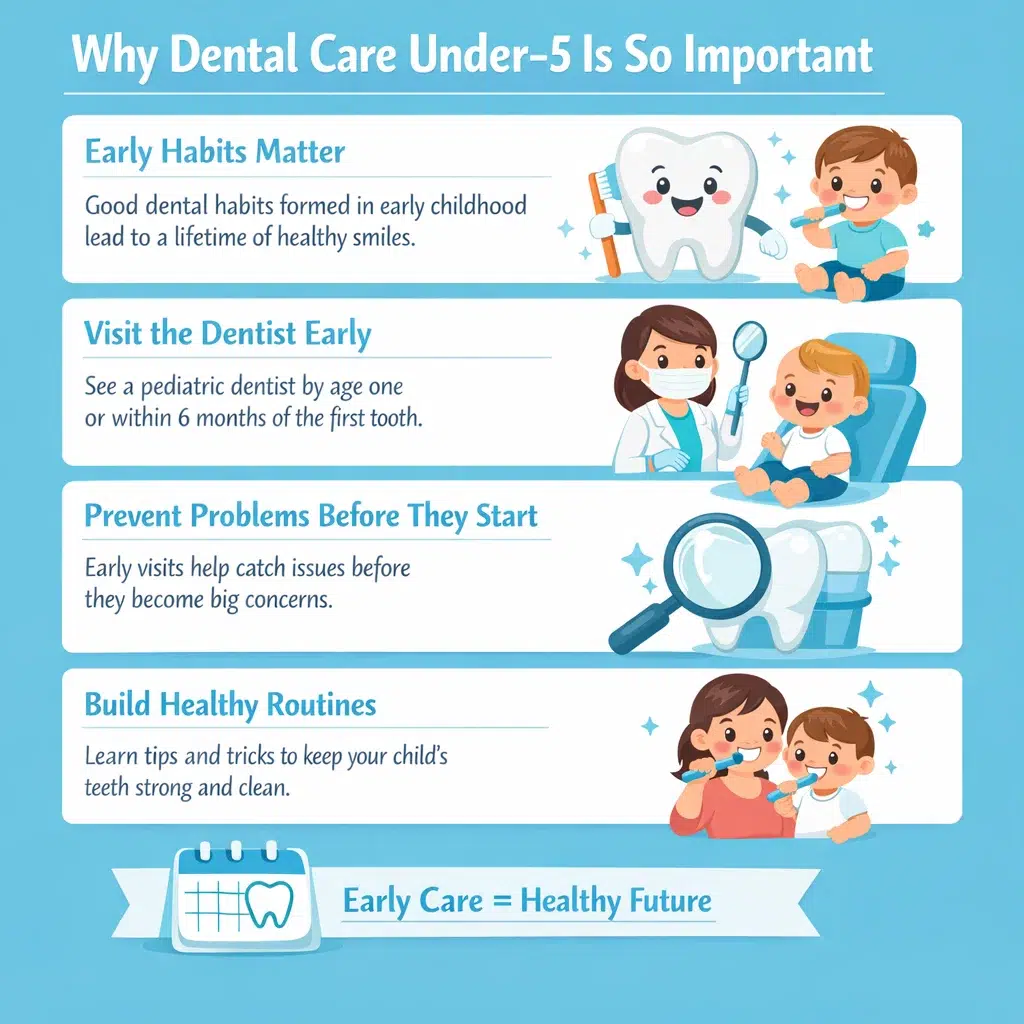
Why the Dental Care Under-5 Is So Important
The habits your child builds before they even start school lay the foundation for decades of oral health. Teeth that are well cared for in early childhood are more likely to come in correctly, stay healthy longer, and avoid the complications that come with untreated decay.
A pediatric dentist works with families throughout the Bannock County area to catch problems early and build prevention routines that actually hold up in real family life.
Getting your child seen before age one, or within six months of their first tooth coming in, is the recommendation from the American Academy of Pediatric Dentistry, and it exists for good reason.
Early visits aren’t about finding problems. They’re about preventing them.
Practical Steps That Work
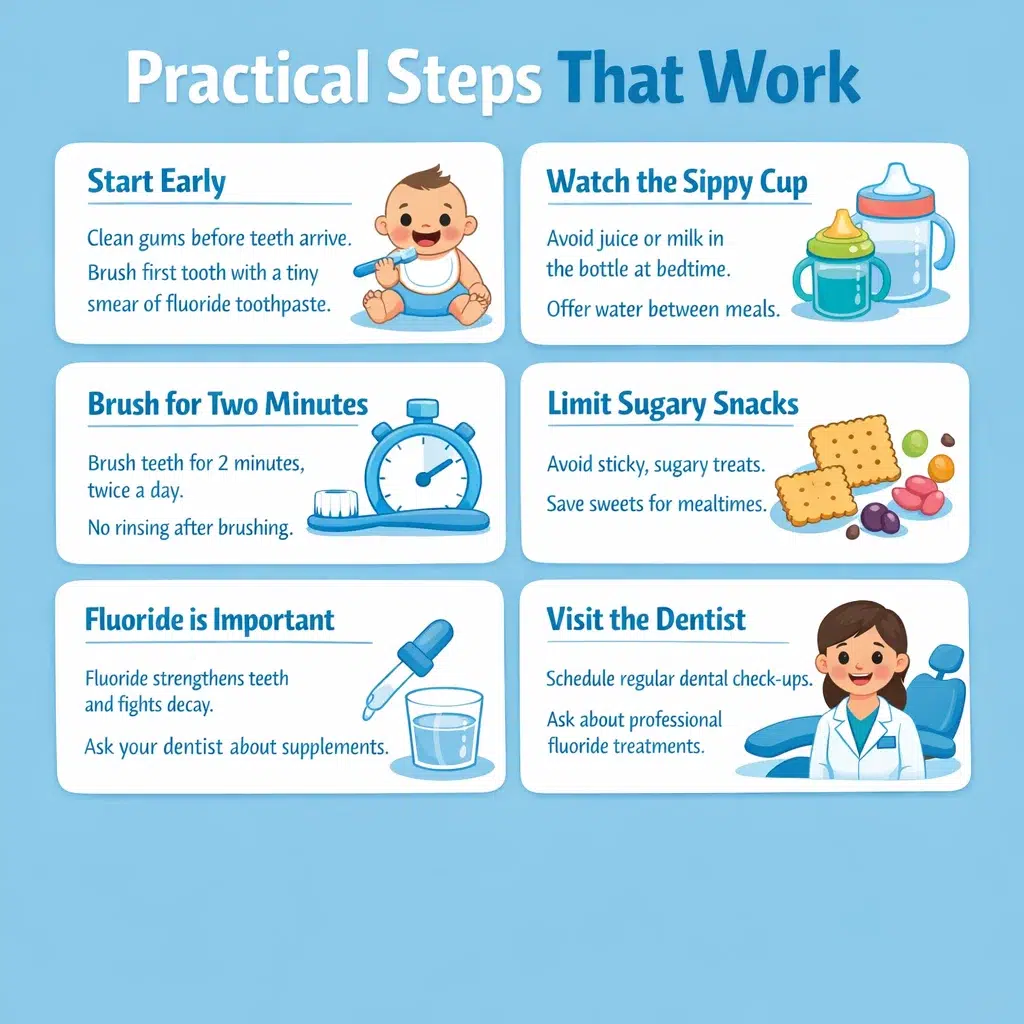
Start brushing before the first birthday. Even before teeth appear, wiping your baby’s gums with a soft, damp cloth after feedings removes bacteria that can damage emerging teeth. Once that first tooth breaks through, switch to a soft-bristled infant toothbrush and a grain-of-rice-sized amount of fluoride toothpaste.
Watch what’s in the sippy cup. Juice, milk, and formula all contain sugars that feed cavity-causing bacteria. Letting your toddler sip juice throughout the day or falling asleep with a bottle dramatically increases the risk of decay. This pattern is so common that it has its own name: baby bottle tooth decay. Offer water between meals and reserve milk for mealtimes.
Don’t skip the two-minute rule. Brush your child’s teeth twice a day. The bedtime brushing is the one that really counts, since saliva production drops at night and the mouth becomes more vulnerable. Use a fluoride toothpaste, and don’t let them rinse with water afterward — the fluoride needs time to work.
Crackers, raisins, gummies, and juice boxes are among the biggest cavity contributors in the toddler diet — not because of the sugar alone, but because of how long they stick to teeth. Frequency matters as much as quantity. Limit sugary snacks to mealtimes, and rinse with water after sticky foods when brushing isn’t possible.
Make fluoride part of the plan. Fluoride strengthens enamel and can actually reverse very early decay. If your Pocatello home uses well water, ask your dentist about fluoride supplements, since well water doesn’t contain the levels of fluoride that municipal water systems provide. Pocatello’s city water is fluoridated, so if you’re on municipal supply, your child is already getting some protection, but professional fluoride treatments during dental visits add another layer.
What a Pediatric Dental Visit Looks Like
Many parents put off their child’s first dental visit because they’re unsure what to expect or worry that their toddler won’t cooperate. That’s completely understandable. But children’s dentistry has changed a lot — visits for young children are short, gentle, and built around making the experience positive rather than clinical.
At Modern Smiles, the goal for every first visit is simple: help your child feel safe. The team performs a gentle exam, checks for early signs of decay, applies a fluoride varnish if appropriate, and gives you a clear picture of where your child’s dental development stands. You leave with a plan — not just a cleaning.
Schedule your child’s first visit at Modern Smiles today. A simple appointment now can save your child from discomfort, complications, and a difficult relationship with the dentist down the road. That’s worth a phone call.
People Also Ask
At what age should I start flossing my child’s teeth?
Start flossing as soon as two teeth touch each other, which often happens by age 2 or 3. You’ll need to do it for them until they have the dexterity to manage it on their own, usually around age six or seven. Focus especially on the back molars, where teeth sit close together.
My toddler refuses to brush. What can I do?
This is one of the most common challenges parents face. A few things that help: let your child pick their own toothbrush (favorite color or character), play a two-minute song to make timing fun, take turns “brushing” a stuffed animal first, or use a toothbrushing app designed for kids. Consistency matters more than perfection — keep at it even on the rough nights.
Is fluoride toothpaste safe for toddlers?
Yes, with the right amount. The American Academy of Pediatric Dentistry recommends a grain-of-rice-sized smear of fluoride toothpaste for children under three, and a pea-sized amount for children ages three to six. At these amounts, even if your child swallows some, it’s within safe limits.
Can teething cause cavities?
Teething itself doesn’t cause cavities, but the habits that come with it sometimes do. Comfort bottles at night, increased snacking, and disrupted brushing routines during teething periods all increase the risk of decay. Keeping the routine consistent during teething, even when it’s hard, pays off.
Can teething cause cavities?
Teething itself doesn’t cause cavities, but the habits that come with it sometimes do. Comfort bottles at night, increased snacking, and disrupted brushing routines during teething periods all increase the risk of decay. Keeping the routine consistent during teething, even when it’s hard, pays off.
What’s the difference between a family dentist and a pediatric dentist for young children?
Pediatric dentists complete two to three additional years of specialty training focused specifically on children’s dental development, behavior, and treatment. They’re trained to work with children who may be anxious, uncooperative, or have special needs. For children under five, that extra layer of training makes a real difference in how comfortable and successful the visit tends to be.